Send Money to Bank Account From Credit Card – Complete UAE Guide
Send Money to Bank Account From Credit Card is a need that usually arises during urgent situations — salary delays, emergency transfers, bill deadlines, or short-term cash flow gaps. In the UAE, this process is possible, but it does not work like a normal bank transfer, especially when the destination is a personal bank account in the UAE or a business bank account used for operational expenses. It involves specific methods, fees, limits, and compliance checks that users must clearly understand before proceeding.
This guide explains all legitimate ways to send money from a credit card to a bank account, how each method works, what documents or conditions are required, and which options are most practical for UAE residents managing everyday personal banking needs or short-term business cash flow requirements.
Can You Send Money to Bank Account From Credit Card?
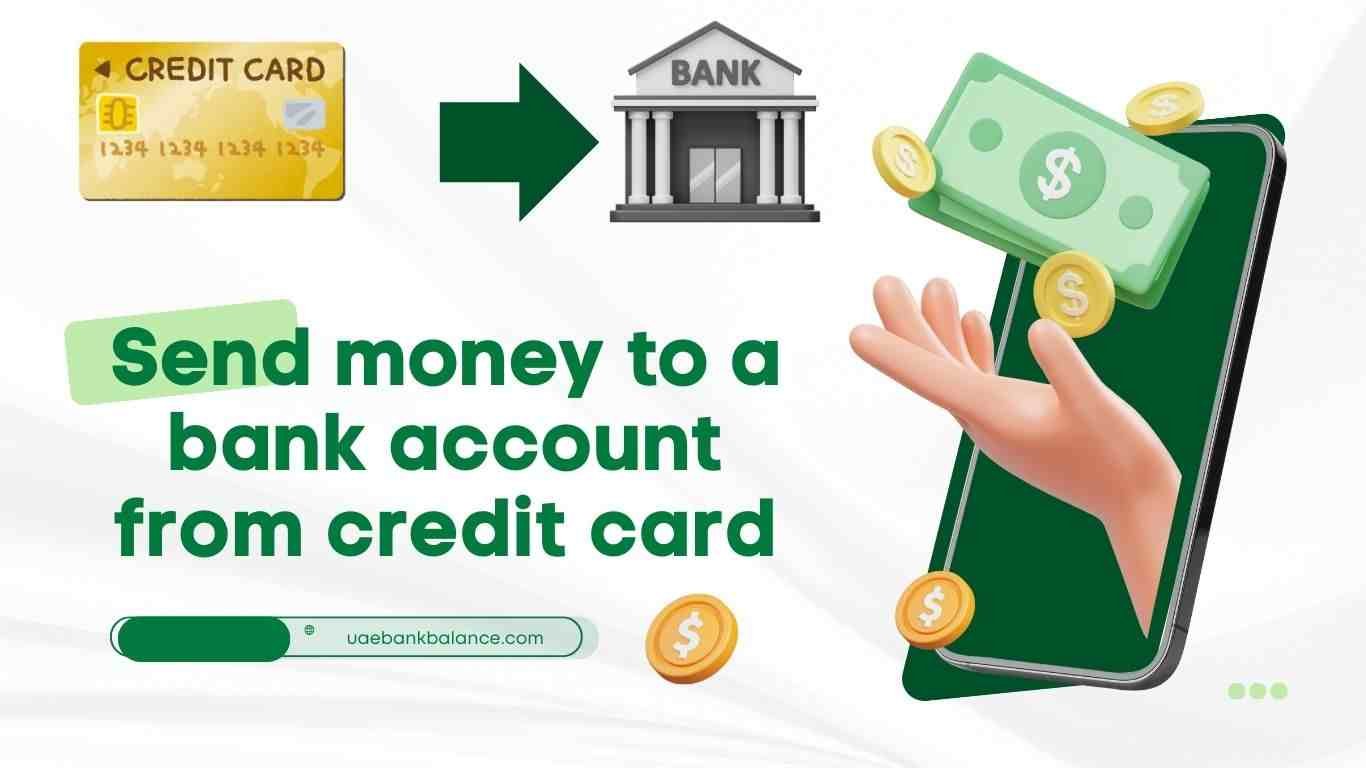
Yes, you can send money from a credit card to any UAE bank account, but banks do not treat this as a standard transfer. Instead, it is processed as:
- A cash-equivalent transaction
- A card-to-account conversion
- Or a third-party intermediary transfer
This distinction matters because:
- Interest may start immediately
- Cash advance fees may apply
- Daily and monthly limits are lower than debit transfers
Understanding the method you choose is critical to avoid unexpected charges.
Method 1: Credit Card Cash Advance to Bank Account
This is the most direct method supported by UAE banks.
How It Works
A cash advance allows you to withdraw funds from your credit card and deposit that amount into a bank account.
Step-by-Step Process
- Check your credit card cash advance limit via mobile banking
- Visit a bank branch or ATM that supports cash advances
- Withdraw cash using your credit card
- Deposit the cash into your bank account through:
- Bank teller
- Cash Deposit Machine (CDM)
Important Things to Know
- Interest starts immediately, no grace period
- Cash advance fees apply (usually 2–4%)
- Daily withdrawal limits are enforced
- Some Islamic credit cards may restrict cash advances
Best For
Emergency use when other digital options are unavailable.
Method 2: Using Digital Wallets as an Intermediary
This is one of the most commonly used modern methods.
How It Works
You load money into a digital wallet using your credit card, then transfer that balance to a bank account.
Common Wallet Types in the UAE
- International wallets with bank withdrawal options
- Regional fintech apps supporting card funding
- Salary or payroll-linked wallets (where permitted)
Step-by-Step Process
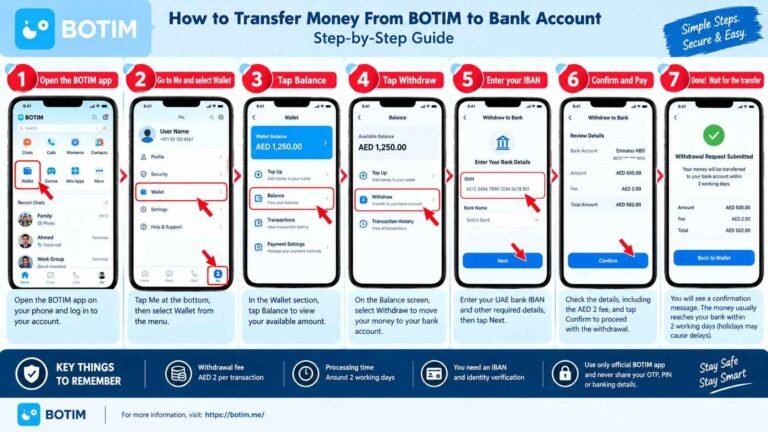
- Add your credit card to the wallet app
- Load funds into the wallet (card charge)
- Complete identity verification (KYC)
- Link your bank account
- Transfer wallet balance to bank account
What You Need
- Valid Emirates ID
- Verified mobile number
- Active bank account
- Credit card enabled for online transactions
Key Notes
- Treated as a card transaction, not a bank transfer
- Wallets may charge loading or transfer fees
- Processing time can range from minutes to 1–3 business days
Method 3: Peer-to-Peer Transfer Apps With Bank Withdrawal
Some platforms allow credit card funding and bank payouts.
How It Works
You send money using your credit card to another user (or your own linked profile), then withdraw it to a bank account.
Steps Involved
- Register and verify your account
- Add credit card as a funding source
- Send money to the wallet balance
- Initiate bank withdrawal
Compliance Checks
- Source of funds verification
- AML screening
- Transaction monitoring
Best For
Small to medium transfers where speed matters more than cost.
Method 4: Bank-Enabled Credit Card Transfers (Limited Availability)
Some UAE banks allow direct credit-to-account transfers under specific conditions.
How It Works
Banks treat the transaction as:
- Balance transfer
- Temporary credit facility
- Short-term liquidity service
Requirements
- High credit score
- Long account history
- Pre-approved offer from the bank
Steps
- Log in to your bank’s mobile app
- Select balance or cash transfer option
- Enter beneficiary bank account details
- Confirm charges and interest
- Complete OTP verification
Important
Not all banks offer this, and it may only appear as a targeted feature.
Fees and Charges You Must Understand
Sending money from a credit card is never free.
Common Charges Include
- Cash advance fee
- Immediate interest (daily calculation)
- Wallet loading fee
- Transfer processing fee
Interest Warning
Unlike purchases, credit card transfers usually do not have an interest-free period.
Limits You Should Expect
Limits vary by:
- Bank
- Card type
- Customer risk profile
Typical Limits
- Daily limit: AED 1,000 – AED 10,000
- Monthly cap based on credit limit
- Wallet-specific transaction caps
Always check limits inside your banking app before initiating a transfer.
Documents and Verification Requirements
For compliance reasons, UAE banks and wallets may require:
- Emirates ID
- Proof of income (for large transfers)
- Transaction purpose declaration
- Updated KYC
This is especially strict for repeated or high-value transfers.
Is This Allowed Under UAE Banking Rules?
Yes — but under strict monitoring.
Banks and fintech platforms operate under:
- Central Bank of UAE regulations
- AML (Anti-Money Laundering) laws
- KYC compliance requirements
Unusual patterns may trigger:
- Temporary holds
- Additional verification
- Account review
Risks You Should Consider
Before sending money from a credit card to a bank account, consider:
- High interest costs
- Impact on credit utilization ratio
- Possible cash advance classification
- Reduced future credit availability
This method is best used short-term, not as a regular habit.
Best Practices to Reduce Cost
- Use digital wallets with lower fees
- Repay transferred amount quickly
- Avoid repeated small transfers
- Check if your bank offers promotional balance transfers
Final Thoughts
Sending money to a bank account from a credit card is possible in the UAE, but it requires choosing the right method and understanding the cost structure. Whether you use a cash advance, digital wallet, or bank-enabled transfer, the key is awareness — of fees, limits, and compliance rules.
Used wisely, this option can solve short-term cash needs. Used carelessly, it can become expensive very quickly.