
Minimum Salary for Credit Card in UAE (2026): Bank-Wise Eligibility Guide
Getting a credit card in the UAE is easier than many people think, but one of the first requirements banks check is your monthly salary. Whether you’re applying for your first credit card or upgrading to a premium one, understanding the minimum salary requirement can save you time and improve your chances of approval.
Many UAE residents search for questions like “What is the minimum salary for a credit card in the UAE?”, “Can I get a credit card with a AED 3,000 salary?”, or “Which banks offer credit cards with a AED 5,000 salary?” The answer isn’t always the same because each bank sets its own eligibility criteria based on the type of card, your employer, credit history, and overall financial profile.
In this guide on UAEbankbalance.com, you’ll learn the typical salary requirements for different credit card categories, how banks evaluate applications, which documents you’ll need, and practical tips to improve your approval chances.
Official Reference: The Central Bank of the UAE requires banks to assess a customer’s ability to repay before issuing a credit card. Banks must follow responsible lending practices and affordability assessments. Official Rulebook: https://rulebook.centralbank.ae/en/rulebook/article-5-credit-cards-0
What Is the Minimum Salary for Credit Card in UAE?
There is no single minimum salary that applies to every bank in the UAE. Each bank determines its own eligibility requirements depending on the type of credit card being offered.
However, for many entry-level credit cards, the minimum monthly salary typically starts from AED 5,000. Some premium cards require significantly higher salaries because they include additional travel, lifestyle, and rewards benefits.
It’s also important to remember that meeting the salary requirement does not guarantee approval. Banks also review your credit history, existing loans, employer category, debt burden, and overall financial stability before making a decision.
If your salary is below the required amount, some banks may offer alternative options, such as a secured credit card backed by a fixed deposit.
Why Do UAE Banks Set Minimum Salary Requirements?
A credit card allows customers to borrow money up to an approved credit limit. Before granting that facility, banks need to ensure that applicants can comfortably repay their outstanding balances.
Minimum salary requirements help banks:
- Assess repayment ability.
- Reduce lending risk.
- Comply with Central Bank regulations.
- Prevent excessive borrowing.
- Promote responsible lending.
Banks may also evaluate your Debt Burden Ratio (DBR), which compares your monthly debt obligations to your monthly income.
Typical Minimum Salary by Credit Card Category
Although requirements differ between banks, the table below shows the typical salary ranges for different categories of UAE credit cards.
| Credit Card Category | Typical Minimum Salary |
|---|---|
| Entry-Level Cashback Cards | AED 5,000 |
| Rewards Credit Cards | AED 5,000–8,000 |
| Platinum Cards | AED 8,000–15,000 |
| Signature Cards | AED 15,000+ |
| Infinite / World Elite Cards | AED 20,000–30,000+ |
These figures are general market ranges. Always check the official eligibility criteria before submitting your application.
Minimum Salary Requirements by Popular UAE Banks
Different banks offer credit cards designed for various income levels. Some focus on entry-level customers, while others specialise in premium banking products.
| Bank | Typical Starting Salary* |
|---|---|
| First Abu Dhabi Bank (FAB) | From AED 5,000 (selected cards) |
| Emirates NBD | From AED 5,000 (selected cards) |
| ADCB | From AED 5,000 (selected cards) |
| Dubai Islamic Bank (DIB) | Varies by card |
| Abu Dhabi Islamic Bank (ADIB) | Varies by card |
| Mashreq Bank | From AED 5,000 (selected cards) |
| RAKBANK | Varies by card |
| Emirates Islamic | Varies by card |
| HSBC UAE | Higher salary for many premium cards |
| Standard Chartered UAE | Varies by product |
*Eligibility differs depending on the specific card, employment type, and the bank’s internal approval criteria.
Can You Get a Credit Card with a AED 3,000 Salary?
This is one of the most searched questions in the UAE.
In general, most unsecured credit cards are not available to applicants earning AED 3,000 per month because many entry-level cards require a higher monthly salary.
However, some banks may offer a secured credit card if you place a fixed deposit with the bank. Approval depends on the bank’s policies and your overall financial profile.
If you earn AED 3,000, it’s also worth exploring salary accounts and banking relationships that may improve future eligibility as your income increases.
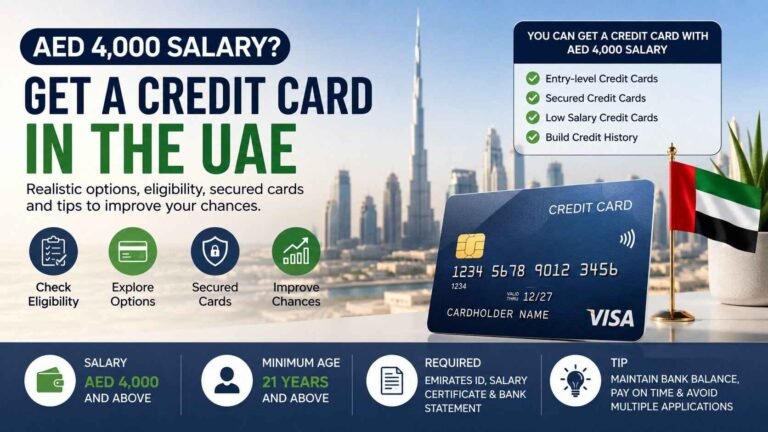
Can You Get a Credit Card with a AED 4,000 Salary?
A monthly salary of AED 4,000 falls between the eligibility requirements for many entry-level credit cards. While some banks may consider applications from customers earning this amount, approval is not common for standard unsecured credit cards.
If you earn AED 4,000, the bank may look more closely at factors such as:
- Your employer and salary transfer arrangement.
- Your AECB credit history.
- Existing loans or credit card balances.
- Employment stability.
- Monthly financial commitments.
Some applicants may have better approval chances if they have maintained a salary account with the same bank for a long period or if they apply for a secured credit card.
Can You Get a Credit Card with a AED 5,000 Salary?
Yes. A monthly salary of AED 5,000 is one of the most common minimum income requirements for many entry-level credit cards in the UAE.
At this salary level, you may become eligible for selected cashback, shopping, rewards, or basic lifestyle credit cards offered by different banks. However, meeting the salary requirement alone does not guarantee approval. Banks will still assess your affordability, employment details, credit score, and existing financial obligations before making a final decision.
If you have a good repayment history and a stable income, your chances of approval are generally higher.
Other Eligibility Requirements
Besides your monthly salary, banks consider several additional factors before approving a credit card application.
Most applicants should meet the following basic requirements:
- Be at least 21 years old.
- Hold a valid Emirates ID.
- Have a valid UAE residence visa (for expatriates).
- Earn the minimum salary required for the selected card.
- Have a satisfactory AECB credit history.
- Meet the bank’s affordability assessment.
- Provide the required supporting documents.
Some premium cards may also require applicants to maintain a relationship with the bank or transfer their salary to the issuing bank.
Documents Required for a Credit Card Application
Although requirements vary slightly between banks, the following documents are commonly requested during the application process.
| Document | Purpose |
|---|---|
| Emirates ID | Identity verification |
| Passport Copy | Personal identification |
| UAE Residence Visa | Residency confirmation (for expatriates) |
| Salary Certificate | Income verification |
| Recent Salary Slips | Proof of monthly income |
| Bank Statements | Financial assessment |
| Completed Application Form | Credit card request |
Some banks may request additional documents depending on your employment type or the specific credit card.
How Banks Decide Whether to Approve Your Application
Every credit card application undergoes an internal review. The bank evaluates multiple factors rather than relying only on your salary.
These factors commonly include:
Monthly Income
Higher income generally improves your eligibility and may qualify you for a higher credit limit or premium card.
Credit History
Banks review your credit report through the Al Etihad Credit Bureau (AECB). A strong repayment history demonstrates responsible borrowing and can improve your approval chances.
Existing Loans and Credit Cards
If you already have large loans or several credit cards with high outstanding balances, the bank may determine that your debt burden is too high for another credit facility.
Employer Category
Many banks maintain internal employer lists. Working for an approved employer or a well-established company may strengthen your application.
Salary Transfer
Customers who transfer their salary to the issuing bank sometimes receive access to additional credit card options or simplified application processes.
Employment Stability
Applicants who have been employed with the same company for a longer period are often viewed as lower-risk borrowers.
Tips to Improve Your Approval Chances
If you’re planning to apply for a UAE credit card, following a few practical steps can increase your chances of success.
- Apply only for cards that match your salary level.
- Maintain a good AECB credit history by paying existing loans and credit cards on time.
- Avoid applying for several credit cards within a short period.
- Reduce outstanding debts before submitting a new application.
- Keep your salary documents updated.
- Ensure your Emirates ID and visa remain valid.
- Consider transferring your salary to the issuing bank if required.
Building a strong banking relationship and maintaining responsible financial habits can make future applications easier.
Common Reasons Why Credit Card Applications Are Rejected
Even applicants who meet the salary requirement may receive a rejection.
Some common reasons include:
- Monthly salary below the card’s minimum requirement.
- Poor AECB credit history.
- High Debt Burden Ratio (DBR).
- Incomplete or incorrect documents.
- Short employment history.
- Frequent credit applications.
- Employer not meeting the bank’s eligibility criteria.
If your application is declined, you may wish to improve your financial profile before applying again rather than submitting multiple applications immediately.
Safety Note
Always apply for a credit card through the official website of the bank, its authorised branches, or verified relationship managers. Be cautious of individuals or social media advertisements promising “guaranteed approval” in exchange for upfront fees. UAE banks will never ask you to share your OTP, online banking password, ATM PIN, or CVV during the application process. If you receive suspicious calls or messages requesting confidential banking information, end the conversation immediately and contact the bank using its official customer service channels.
Frequently Asked Questions
What is the minimum salary for a credit card in the UAE?
Many entry-level UAE credit cards typically require a minimum monthly salary of AED 5,000, although requirements vary by bank and card type.
Can I get a credit card with a AED 3,000 salary?
Most unsecured credit cards are not available at this income level. Some banks may offer secured credit cards against a fixed deposit, subject to their policies.
Which banks offer credit cards starting from AED 5,000 salary?
Several UAE banks, including FAB, Emirates NBD, ADCB, and Mashreq, offer selected entry-level credit cards with salary requirements starting around AED 5,000. Eligibility depends on the specific card and bank criteria.
Does salary transfer improve approval chances?
In many cases, yes. Having your salary transferred to the issuing bank may improve eligibility for certain credit card products, although approval is still subject to the bank’s assessment.
Is meeting the salary requirement enough to get approved?
No. Banks also evaluate your credit history, existing debts, employer, employment stability, affordability, and other internal risk factors before making a lending decision.
Conclusion
Understanding the minimum salary for a credit card in the UAE can help you choose the right card and avoid unnecessary application rejections. While AED 5,000 per month is a common starting point for many entry-level credit cards, each bank has its own eligibility criteria and approval process. Maintaining a good credit history, keeping your financial commitments under control, and applying for a card that matches your income can significantly improve your chances of approval.
If your current salary does not meet the requirement, consider building your banking relationship, improving your credit profile, or exploring secured credit card options until you become eligible for a wider range of products.